When will I get my period? How to work it out
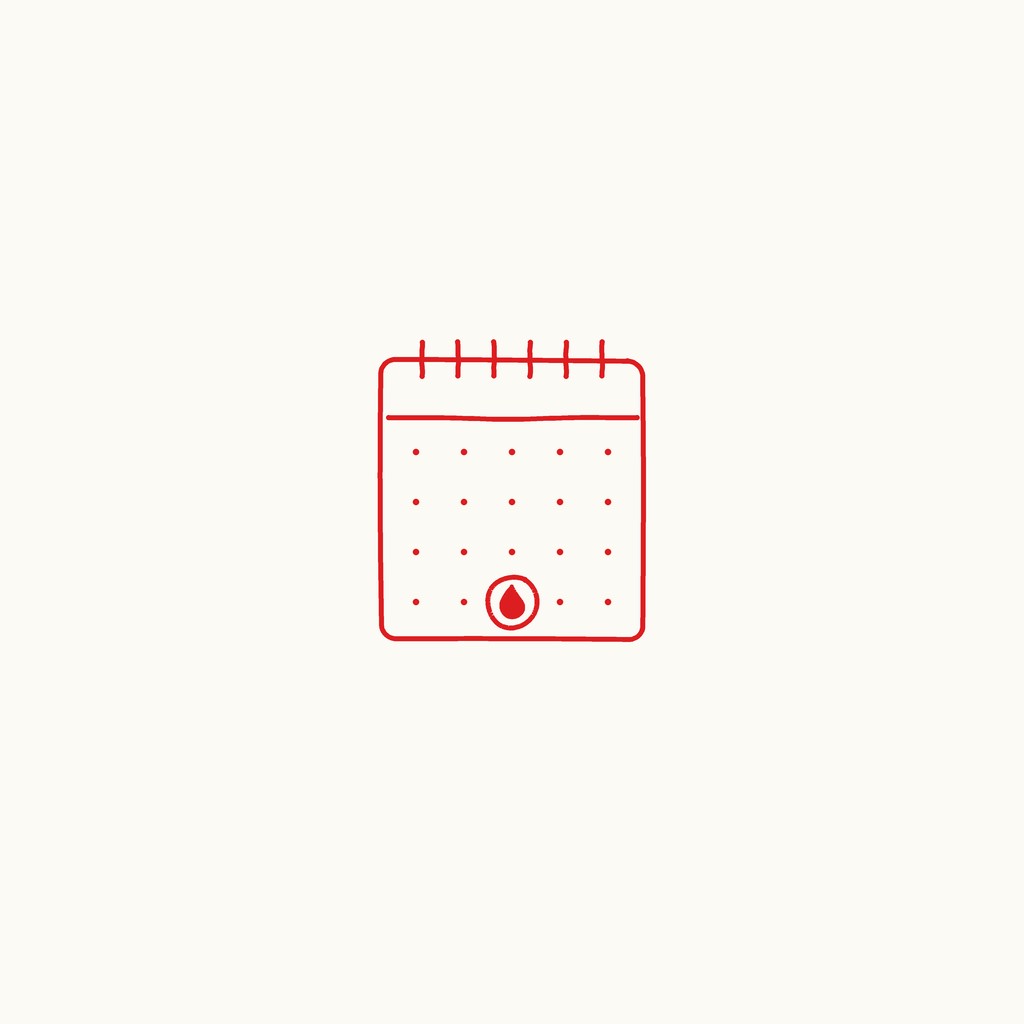
Short answer: add your average cycle length to the first day of your last period. If your cycle averages 29 days and your last period started on 3 October, expect the next one around 1 November. The more cycles you track, the better that estimate gets.
Simple, and it is. But most people count with 28 days because that is what every textbook says, while hardly anyone has exactly 28 days. Below you read how to do it with your own numbers, why the date sometimes moves a few days, and when that movement is a reason to get it checked.
Step 1: count your cycle the right way
Your cycle starts on day 1: the first day of real bleeding. Not the day with a few brown spots before it, but the day you need a pad, tampon or cup. Your cycle ends on the day before your next period starts.
If your last period started on 1 September and the next one on 30 September, that cycle was 29 days.
Step 2: average a few cycles
One cycle tells you little. Take the length of your last three to six cycles and work out the average. An example:
- Cycle 1: 27 days
- Cycle 2: 30 days
- Cycle 3: 29 days
- Cycle 4: 28 days
Together 114 days, divided by 4 is an average of 28.5 days. So you expect your next period 28 to 29 days after the first day of your last one.
Step 3: count forward from your last day 1
First day of your last period plus your average cycle length is the expected start date. Honestly, allow a margin of a few days around it. A prediction is a window, not an appointment.
What is a normal cycle length?
In adult women a cycle usually lasts between 21 and 35 days, and a period usually lasts 2 to 7 days. The NHS even calls 21 to 40 days common. In the first years after your first period and in the years before menopause, longer and changing cycles are very normal. Read more in what a normal menstrual cycle is.
Even a healthy cycle varies a little. A few days of difference from month to month is normal.
Why your period sometimes comes early or late
Your cycle roughly has two parts. The part after ovulation (the luteal phase) is fairly stable for most women, around 12 to 14 days. The part before ovulation is the part that moves. Anything that delays ovulation also moves your period. Common reasons:
- Stress, a busy period, moving house or poor sleep.
- Illness, even a bad flu.
- Travel, especially across time zones.
- Losing or gaining a lot of weight, or suddenly training much harder.
- Stopping the pill: your own rhythm needs to restart. Read stopping the pill.
- Breastfeeding and the months after giving birth.
- Conditions such as PCOS or an over or underactive thyroid.
A useful consequence: if you know when you ovulated, you can predict your period more precisely than with the calendar alone. Count about 14 days after ovulation. How to find your ovulation is in calculating ovulation.
Signs your period is coming
Your body often gives a hint in the days before. Think of tender breasts, bloating, spots, sugar cravings, less energy or a shorter fuse. Not everyone has this, and not equally strong every month. Recognise the pattern? Read recognising PMS symptoms and breast tenderness before your period.
You are late, now what?
Had sex without contraception, or not sure? Take a pregnancy test. Most tests are reliable from the day your period was due. If the test is negative and your period still does not come, test again after a few days. What else can be going on is in early signs of pregnancy and missed period and not pregnant.
When to see a doctor
- Your cycle is always shorter than 21 days or longer than 35 days.
- Your cycles vary a lot in length, while they used to be regular.
- Your period stays away for three months or more and you are not pregnant.
- You bleed between periods, or after sex.
- Your period lasts longer than seven days or is so heavy that you plan your day around it. See heavy periods and iron deficiency.
Bring your own data. Two or three tracked cycles are far more useful to a doctor than "it is a bit irregular".
Let an app do the maths
A period tracker does steps 1 to 3 for you, every cycle again, and learns from your own cycles instead of an average. In PERIOD. you see your expected period and fertile days in a calendar, and you get a reminder before it starts. The basics are free, your data stays in the EU and is never sold.
Sources: Thuisarts.nl (Dutch College of General Practitioners), Menstruation and Irregular periods; NHS, Periods and fertility in the menstrual cycle; ACOG, Heavy and Abnormal Menstrual Bleeding. This article is general information and not medical advice. In doubt? See your doctor.
FAQ
How do I calculate when my period will come?
Add your average cycle length to the first day of your last period. Use the average of your last three to six cycles and allow a margin of a few days.
From which day do I count my cycle?
Day 1 is the first day of real bleeding. A few brown spots before it do not count yet. The cycle runs until the day before your next period.
How many days late is normal?
A few days of difference per month is normal. If you are more than a week later than expected and have had sex, take a pregnancy test. If your period stays away for three months and you are not pregnant, see your doctor.
Is an app prediction always right?
No. An app calculates from your previous cycles, so the more you track, the better the estimate. Stress, illness or travel can still move your period by a few days.
Want to know when your next period is due without doing the maths? Download PERIOD. on the App Store or on Google Play. The basics stay free.