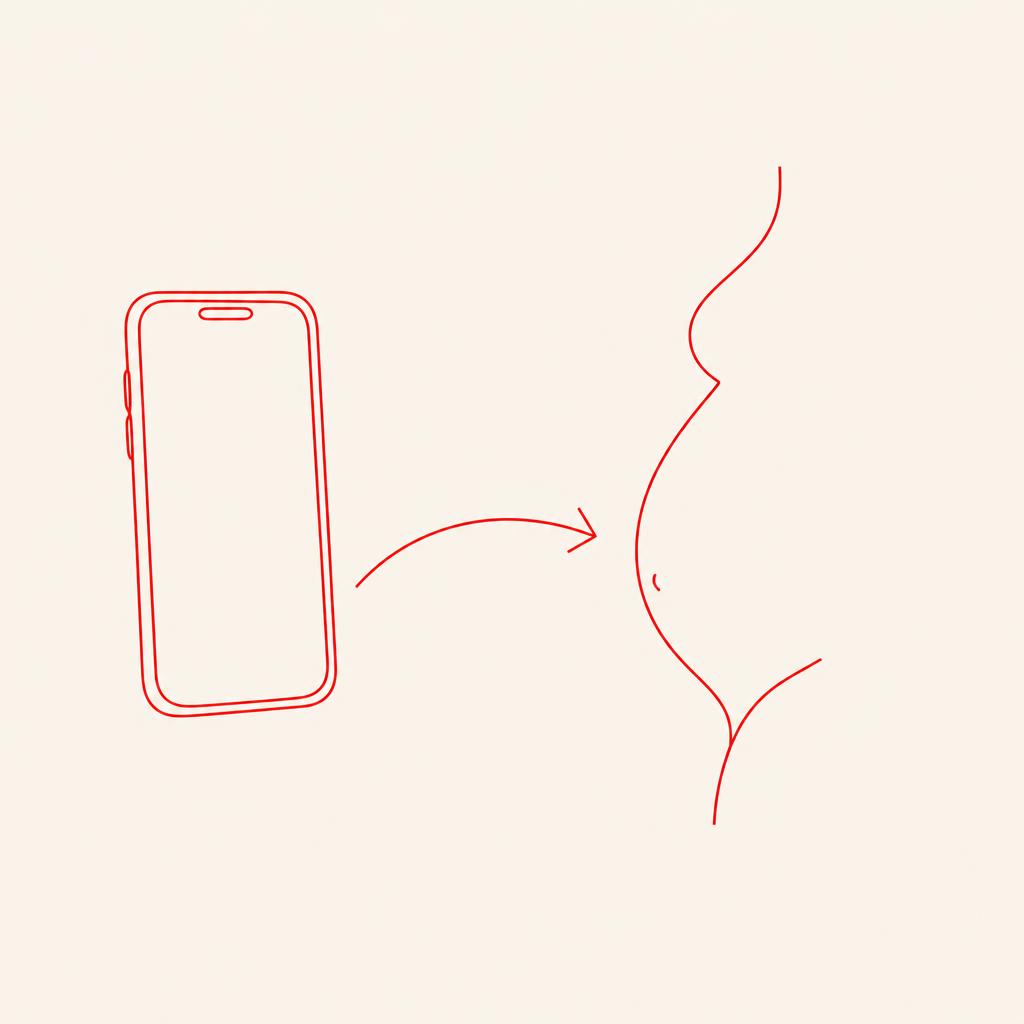
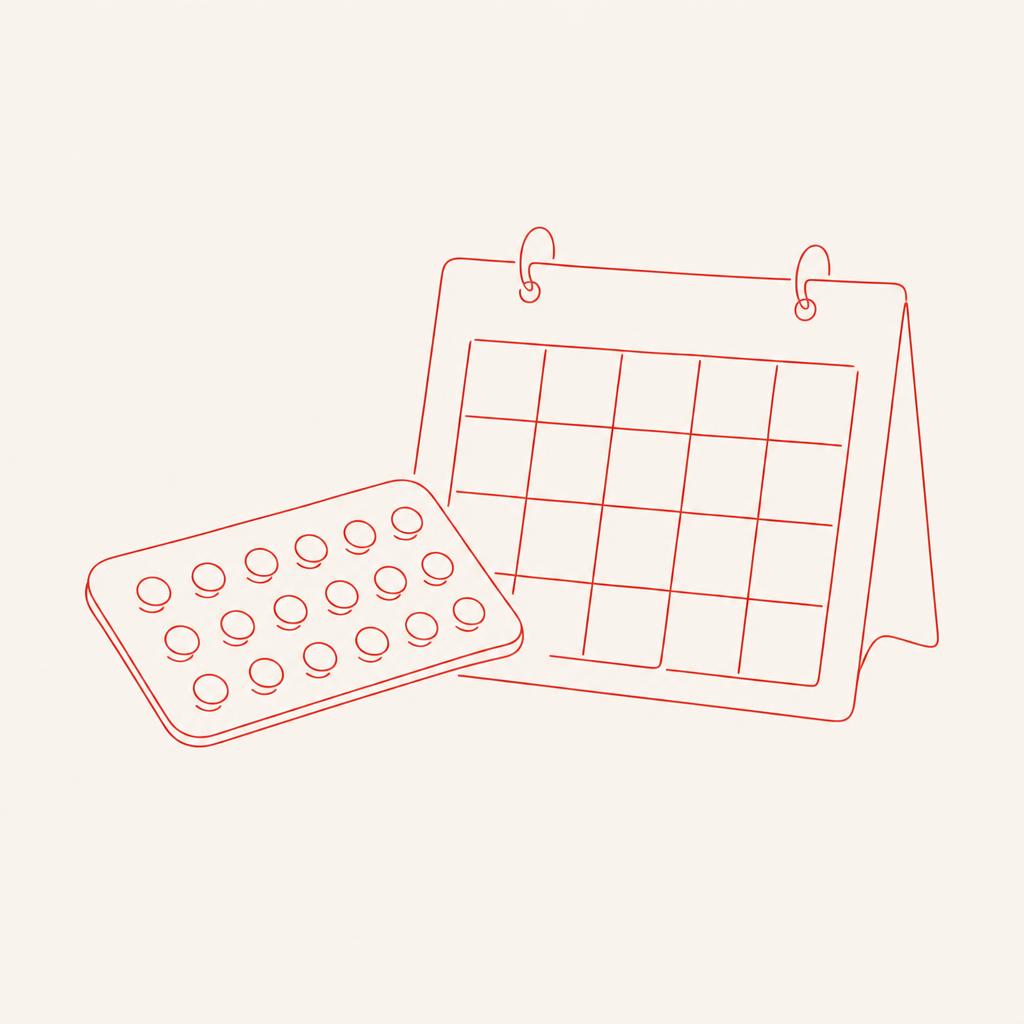
Tracking your period for the first time? Start here (without it becoming a project)

Effective cycle tracking requires recording only three core data points: the start and end of your period, your daily energy levels, and your dominant mood. By focusing on these essentials for two to three months, you will identify your personal hormonal patterns without the need for exhaustive daily logging.
Most people approach cycle tracking with the same intensity they bring to a new fitness regime: they buy a thermometer, download five apps, and try to track everything from caffeine intake to cervical mucus on day one. Within two weeks, the data entry feels like a chore, and the "project" is abandoned. This is a mistake. The goal of tracking is not to amass an infinite spreadsheet of data, but to understand how your hormones influence your reality.
At PERIOD. we advocate for a minimalist approach. When you strip away the noise, you can actually see the signal. This guide will show you how to start tracking efficiently, what to ignore, and why keeping this data private is non-negotiable.
The Minimalist Starter Menu: The Three Essentials
If you are tracking for the first time, you do not need 30 different symptoms. You need a baseline. To establish this, you only need to record three things every day. It takes less than thirty seconds.
- Period Dates: Mark the first day of your flow (Day 1 of your cycle) and the day it ends. This establishes your cycle length and the duration of your menstruation.
- Energy Levels: Are you feeling "get things done" productive, or "stay on the couch" exhausted? Hormonal shifts, particularly the rise and fall of estrogen and progesterone, directly impact your metabolic rate and mitochondrial function.
- Mood: This isn't about complex therapy notes. Note if you feel sociable, irritable, anxious, or calm. You will likely notice that irritability peaks in the days before your period (the luteal phase), while sociability peaks during ovulation.
By sticking to these three, you remove the barrier to entry. You can find more about the science behind these phases in our knowledge base.
What Not to Track (The Noise)
The wellness industry often suggests tracking every possible variable, from the exact milliliter of water you drink to the specific texture of your skin. For 90% of women, this is unnecessary data that clouds the bigger picture. Unless you are specifically working with a medical professional to diagnose a condition like PCOS or endometriosis, or you are actively trying to conceive, you can safely ignore the following in your first few months:
- Basal Body Temperature (BBT): Tracking your temperature every morning before getting out of bed is a powerful tool for confirming ovulation, but it is high-maintenance. Don't start here.
- Water Intake: Important for health, irrelevant for your cycle phase.
- Skin Changes: Unless you have severe hormonal acne you are trying to map, daily skin checks often lead to unnecessary hyper-fixation.
- Micro-symptoms: Tracking things like "slight bloating" or "mild headache" every single day often makes you feel more symptomatic than you actually are.
Focus on the big swings in mood and energy first. If you eventually need more detail, you can add it later. For now, keep the barrier to entry low.
"The best tracking habit is the one you actually stick to. Consistency beats complexity every time."
Phase One: The First Three Months
The first three cycles are your "calibration phase." During this time, do not try to predict the future. Simply observe. Your body is not a clock; it is a biological system influenced by stress, travel, and illness. Many women are surprised to find their cycle is not the "textbook" 28 days, and that is perfectly normal.
Around month two or three, you will start to see the patterns. You might notice that your energy consistently dips on Day 22, or that you feel most confident on Day 12. This is where the value lies. Instead of wondering why you feel "off," you can look at your data and realize it is simply a predictable part of your cycle. This perspective shift from "what is wrong with me?" to "where am I in my cycle?" is the primary benefit of tracking.
Dit is geen medisch advies, twijfel je of klachten houden aan? Bel je huisarts.
Privacy: Why Storage Matters
When you track your period, you are recording intimate biological data. In the current digital landscape, this data is frequently treated as a commodity. Many apps sell this information to advertisers or, in some jurisdictions, it can be used for legal surveillance.
That's why we built PERIOD. privacy-first: your data is stored encrypted on EU servers (Frankfurt), protected by Row-Level Security so only your account can read it. We don't sell it, share it, or use it for advertising. An account is required so only you can access your own data.
Before you start tracking with any tool, you should understand where that data goes. You can read more about our commitment to your data on our privacy page. You shouldn't have to trade your digital privacy for biological insight.
How to Make it a Habit
To ensure you don’t forget to track, link it to an existing habit. Most people find that the best time is either first thing in the morning or right before bed. Set a daily reminder on your phone for a time when you are usually stationary. It should feel no more taxing than checking the weather forecast.
If you miss a day, don't worry about it. Just pick it up the next day. The goal isn't a perfect streak; it's a useful data set. Even a "messy" log with a few missing days is more useful than no log at all. You can learn more about our philosophy on the About Us page.
The Long-term Goal: Bio-Individual Knowledge
After six months of minimalist tracking, you will have a deep understanding of your own bio-individuality. You will know your "power days" and your "rest days." You will be able to plan your life, work projects, social events, and intense workouts, in a way that works with your physiology rather than against it.
Cycle tracking isn't about control; it's about cooperation. When you know what's coming, you can stop fighting your body and start supporting it. And it all starts with three simple notes a day.
Start tracking your cycle with total privacy and zero fluff by downloading the PERIOD. app today.
Want to understand your cycle better?